Lint Bombs and Other Mishaps 💥
Hey there, I’m Greg.
In our previous newsletter, you were introduced to textdevices.
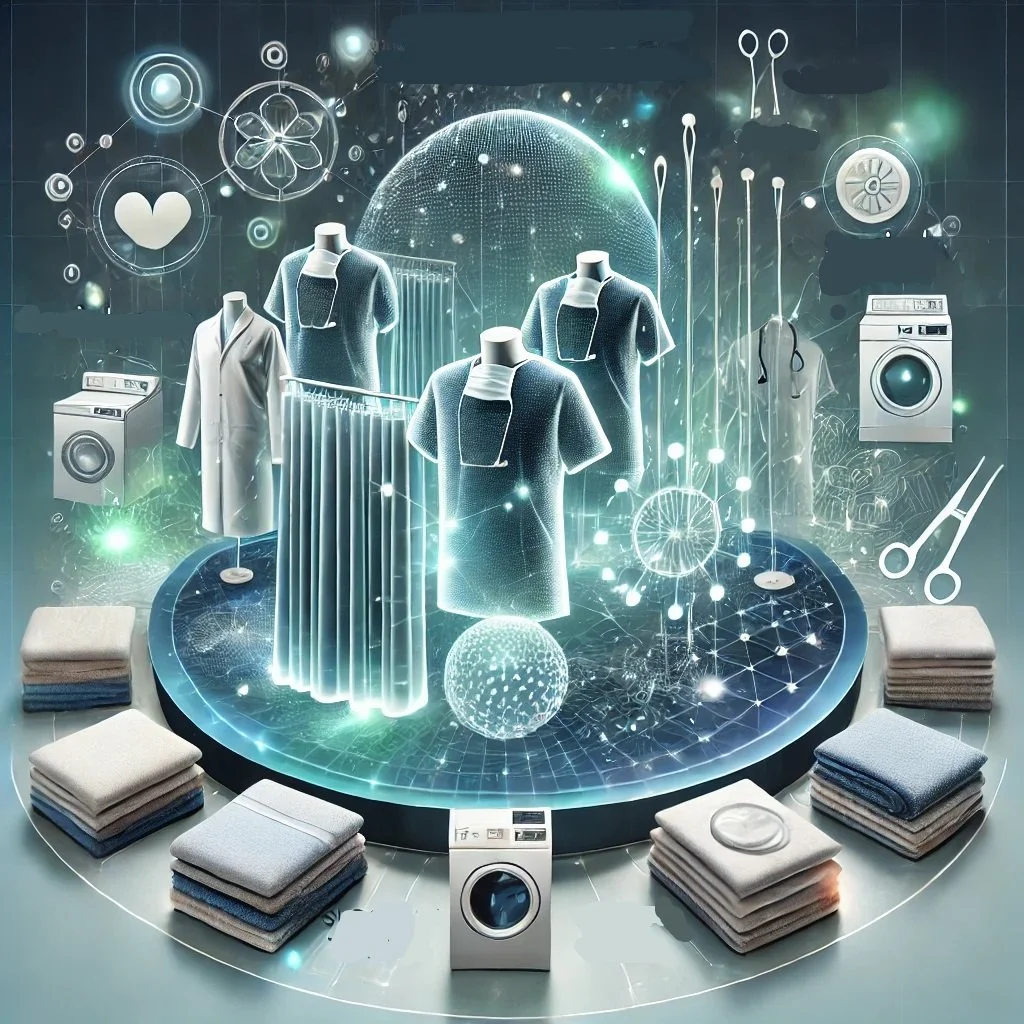
Healthcare facilities are filled with specialty textiles – patient slings, operating room drapes, microfiber cloths – each requiring unique handling. These aren’t just laundry items; they’re regulated medical devices with processing requirements that demand precision.
Now buckle up – this month’s stories revolve around this often-overlooked topic. Why? Because not only are textdevices crucial to patient safety, but improper handling of them till this day still costs healthcare facilities millions of dollars annually across America and the world.
These aren’t just linens; they’re regulated tools essential to patient safety, infection prevention and staff protection. Yet, despite their critical importance, textdevices remain a source of constant frustration (I can already see some of you readers feeling seen and nodding furiously):
Cubicle curtains that come back shredded.
Patient lift slings that disappear like socks in a dryer.
Surgical packs mishandled, compromising sterility.
Why? Because the unique requirements of textdevices often clash with systems optimized for high-volume bulk laundry.
Let’s get into it.
It Was an Expensive Lint Bomb
Years ago, there was one morning, while I was running my mom-and-pop laundry business, Maria, one of my employees, wheeled a laundry tub into my office.
Inside was a disaster:
Torn cubicle curtains with shredded mesh tops.
Surgical towels covered in sticky, white lint.
Patient lift slings with ripped mesh.
Total damage? Around thousands of dollars worth of ruined specialty items.
The culprits were painfully obvious:
Brand-new washcloths thrown in with the surgical towels, creating the perfect “lint bomb.”
Gait belts with heavy steel buckles tossed in with delicate cubicle curtains.
Ultimately, we had failed to train our team on separating, prepping, and processing specialty items. It was the hard way to learn a simple truth: textdevices are not like bulk linens. They require unique handling, and failing to recognize that can lead to big losses – financially and operationally.
After this, we revamped our processes, retrained our team, and tightened controls.
How You Can Revamp Your Processes Too
First and foremost, the first step in managing textdevices is knowing what you’re working with and what items need special care.
Here’s how you can do it:
1. Inventory All Textiles
Take stock of every textile in your facility, and I mean every one. From bulk items like bedsheets and towels to specialty items like patient lift slings and surgical drapes.
Categorize items by their function and risk level (e.g., patient care, surgical use, isolation needs).
2. Look for Class II Medical Devices
Items like reusable surgical gowns and drapes are regulated as medical devices, requiring extra controls.
Look for labels indicating manufacturer details, intended use, and regulatory information.
3. Identify Handling Requirements
Ask these questions:
Does the item require sterilization?
Can it be processed alongside bulk laundry?
Does it need special chemistry, low-heat drying, or protective packaging?
Sterile vs. Hygienically Clean – Matching Standards to Risks
Once you’ve identified your textdevices, it’s time to determine whether they need to be sterile (completely free of all microorganisms, including bacteria, viruses, and spores) or hygienically clean (free of harmful pathogens but not entirely free of microorganisms.).
Sterile Textiles:
When to Use:
Invasive procedures (e.g., surgeries).
High-risk settings (e.g., NICUs, organ transplant units).
Examples: AAMI Level 4 surgical gowns, sterile drapes.
Processing Requirements:
Sterilization via steam, ethylene oxide, or gamma radiation.
Precision in wrapping, labeling, and validation.
Hygienically Clean Textiles:
When to Use:
Routine care (e.g., linens, patient gowns, cubicle curtains).
Environments with moderate infection risk.
Examples: Privacy curtains, microfiber cloths.
Processing Requirements:
Adherence to HLAC or TRSA standards.
Regular audits and monitoring.
Final Thought
Text devices may only represent a fraction of your laundry volume, but their impact on infection prevention and patient safety is enormous.
For those of you following my journey with Compliance Shark, you know I’ve written a book all about healthcare linens and textiles. Sure, I could’ve written about AI or politics – but who needs that drama when we have cubicle curtains and patient slings keeping us on our toes? I’m sending an early copy to anyone who wants to have a firsthand look at it when it launches in a few months. If you want to be a part of that list, email me back saying “Book.”
Otherwise, you know the drill – reply to this email if you’d like to chat. I’m always here to help and love putting a conversation, face, or voice to your emails.
Until next time,
Greg
Compliance Shark